
OSHA published the first-ever federal heat safety standard on August 30, 2024.
Full compliance is mandatory 150 days after final rule publication (expected late 2025 or early 2026)
This isn’t guidance. It’s law. And it affects 36 million U.S. workers.
At 80°F, you must provide one quart of water per employee per hour, documented rest breaks, and acclimatization protocols.
At 90°F, requirements intensify to mandatory 15-minute paid breaks every two hours, employee observation systems, and pre-shift hazard alerts.
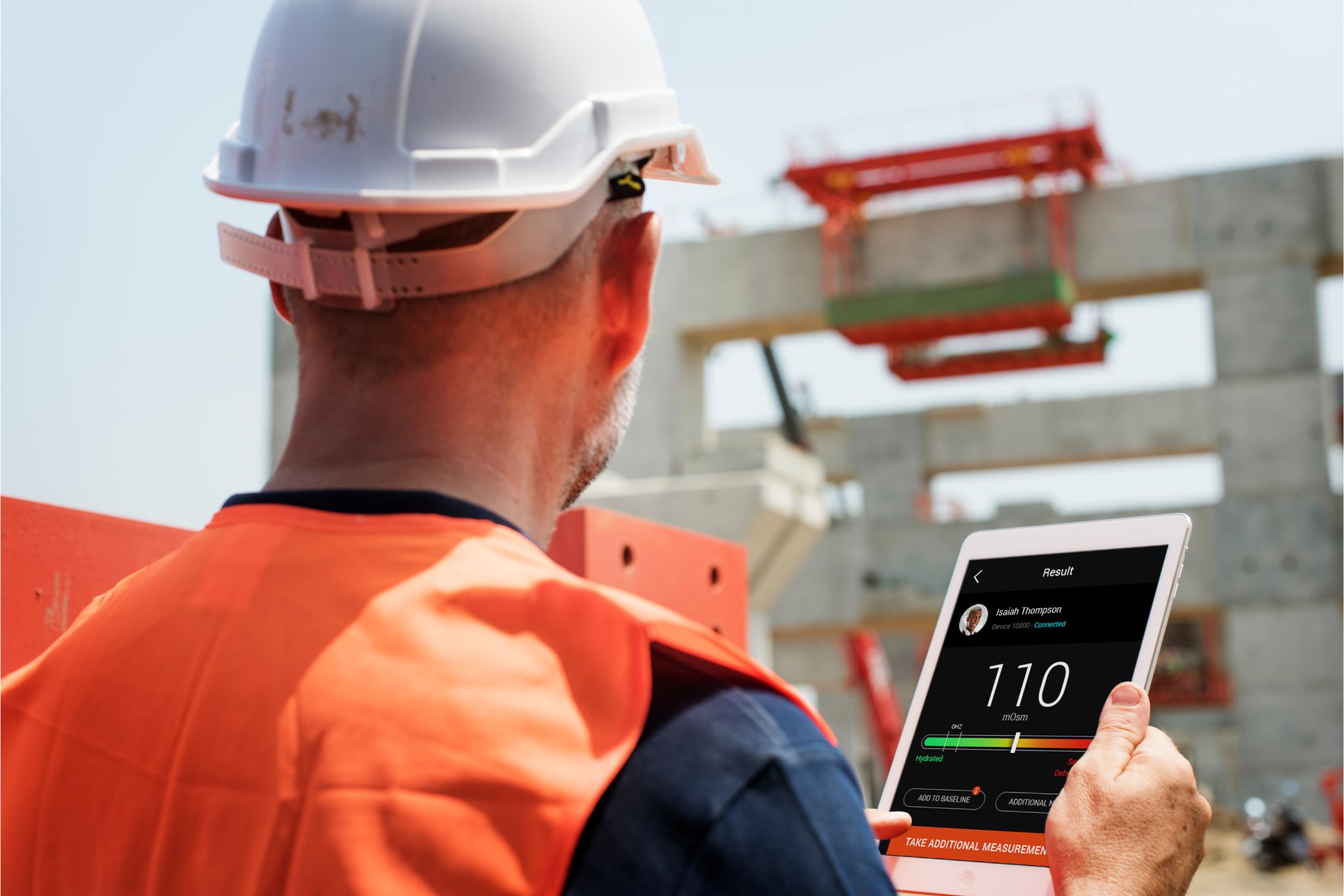
Violations aren’t cheap. OSHA fines reach $165,514 per willful violation. Parkwood Landscape got hit with $276,425 in 2024 for failing to protect workers in heat. That’s just the penalty, before the workers’ comp claims, insurance premium increases, and productivity losses.
The problem: You can provide all the water in the world. Workers still get dehydrated. Because thirst is a terrible indicator of hydration needs. OSHA’s own guidance warns that “thirst cannot be relied on as a guide to the need for water.” Workers don’t realize they’re dehydrated until it’s too late.
What most safety managers don’t realize: Even 2% dehydration—which workers can’t feel—produces cognitive impairment equivalent to 0.08% blood alcohol content. Your workers are making critical safety decisions while effectively intoxicated, and they have no idea.
The Financial Impact of Heat Illness
What One Heat Incident Actually Costs
Direct costs:
- Average workplace heat injury: $42,000
- OSHA serious violation: $16,550
- OSHA willful violation: $165,514
- Daily failure to abate: $16,550 per day
Indirect costs:
One serious heat incident totals $400,000 to $800,000 when you factor in workers’ compensation claims, insurance premium increases, lost productivity during investigation and recovery, legal fees and settlements, administrative burden, loss of contract bidding eligibility, employee turnover and recruitment costs, and reputation damage that affects future business.
The Hidden Productivity Drain
You’re paying full wages for half the output.
Studies have shown productivity goes down 2.6% for every degree above 75°F.
Dehydration multiplies the problem:
- 1% dehydration: 12% productivity decrease
- 3-4% dehydration: 25-50% performance decline
At just 2% dehydration, reaction time slows by 70 milliseconds. In a safety-critical moment, that’s the difference between avoiding an injury and losing a finger.
Your workers are making safety decisions while cognitively impaired. They don’t know it. You don’t know it. And it’s happening every day.
The problem is, you don’t know which of your workers is dehydrated.
Why Traditional Hydration Testing Approaches Don't Work
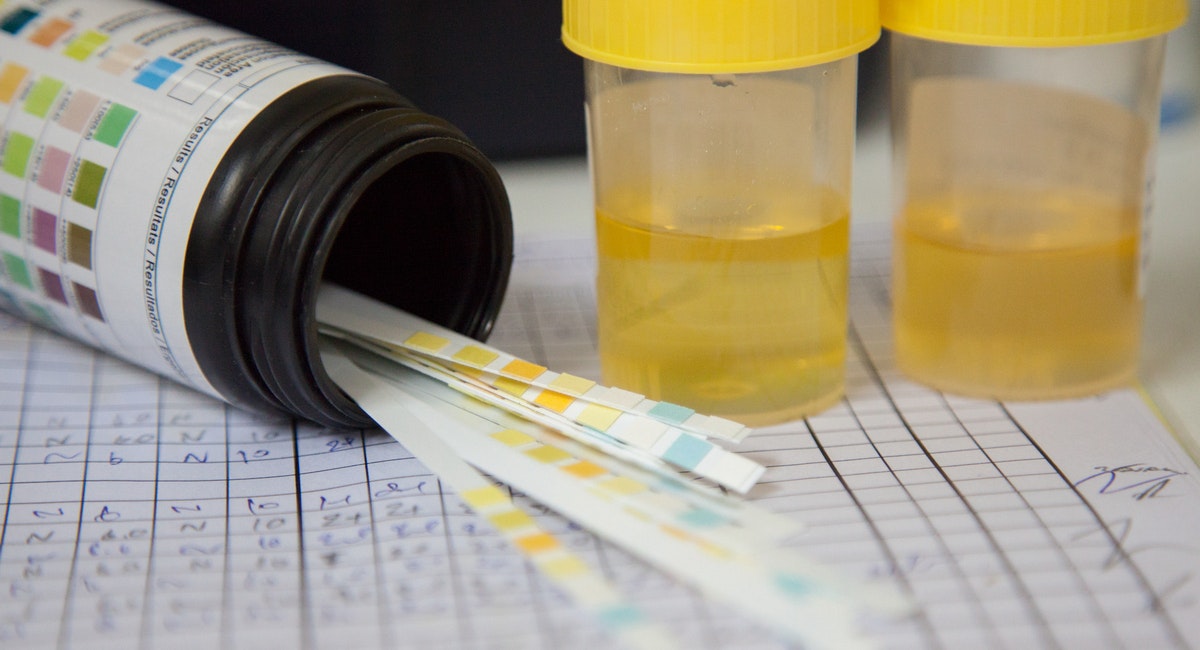
Urine testing—the traditional “gold standard”—has serious problems:
- Requires privacy, creating awkward and time-consuming logistics
- Uncomfortable (and embarrassing) for female workers
- Requires someone who actually needs to urinate at testing time
- Studies show it’s no more accurate than a coin toss for spot-check hydration assessment
- Poor specificity incorrectly classifies up to 70% of actually hydrated people as dehydrated
Sweat patches sound high-tech, but they have limitations:
- Workers must be actively sweating for them to work
- Provide no baseline measurement capability
- Take 45+ minutes to generate results
- Cannot test before heat exposure begins
So you’re left with methods that are invasive, inaccurate, impractical, or all three.
Meanwhile, the new OSHA standard requires objective measurements and documentation. Six months of written records. Tracking individual worker acclimatization. Demonstrating compliance with water provision requirements.
You can’t document what you can’t measure.
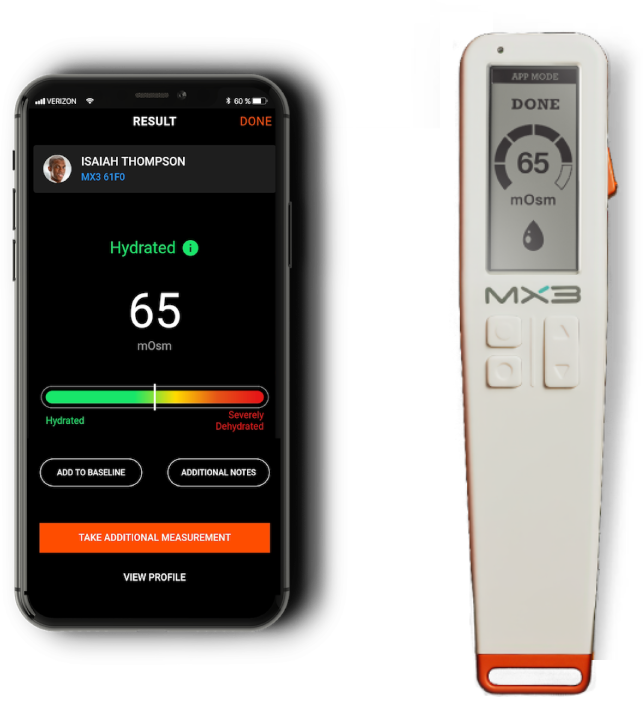
The Reason MX3 Works Where Others Fail
1. Measure Hydration at Rest (Before Heat Exposure)
You can test workers before they’re exposed to heat. This is impossible with sweat-based systems that require active sweating. Testing at rest provides a baseline so you avoid unwanted surprises by know their starting hydration status. Research shows many heat illness incidents occur when workers start their shift already dehydrated.
2. Track Rehydration & Recovery Between Shifts
Measure hydration for individuals actively rehydrating after work. Or assess hydration the following day to verify they’ve consumed sufficient fluid and electrolytes for adequate recovery. Chronic dehydration develops when workers never fully rehydrate between shifts. This is how you catch it early. You can track everything right inside the MX3 app.
3. Cost-Effective for Daily Testing
- 8 seconds per test vs. 45+ minutes for sweat patches
- $0.75 per test vs. $6-12 for patches
Typical usage: Most operations test 2-3 times weekly during the hot season, with daily testing during heat waves or more frequent testing while new workers acclimate.
How the numbers break down, a 50-person crew testing 3 times per week for 20 weeks uses approximately 3,000 strips annually ($2,250).
Speed enables much greater testing frequency. You can test an entire crew in minutes. No workflow disruption. No privacy concerns. No paperwork burden. No female embarrassment.
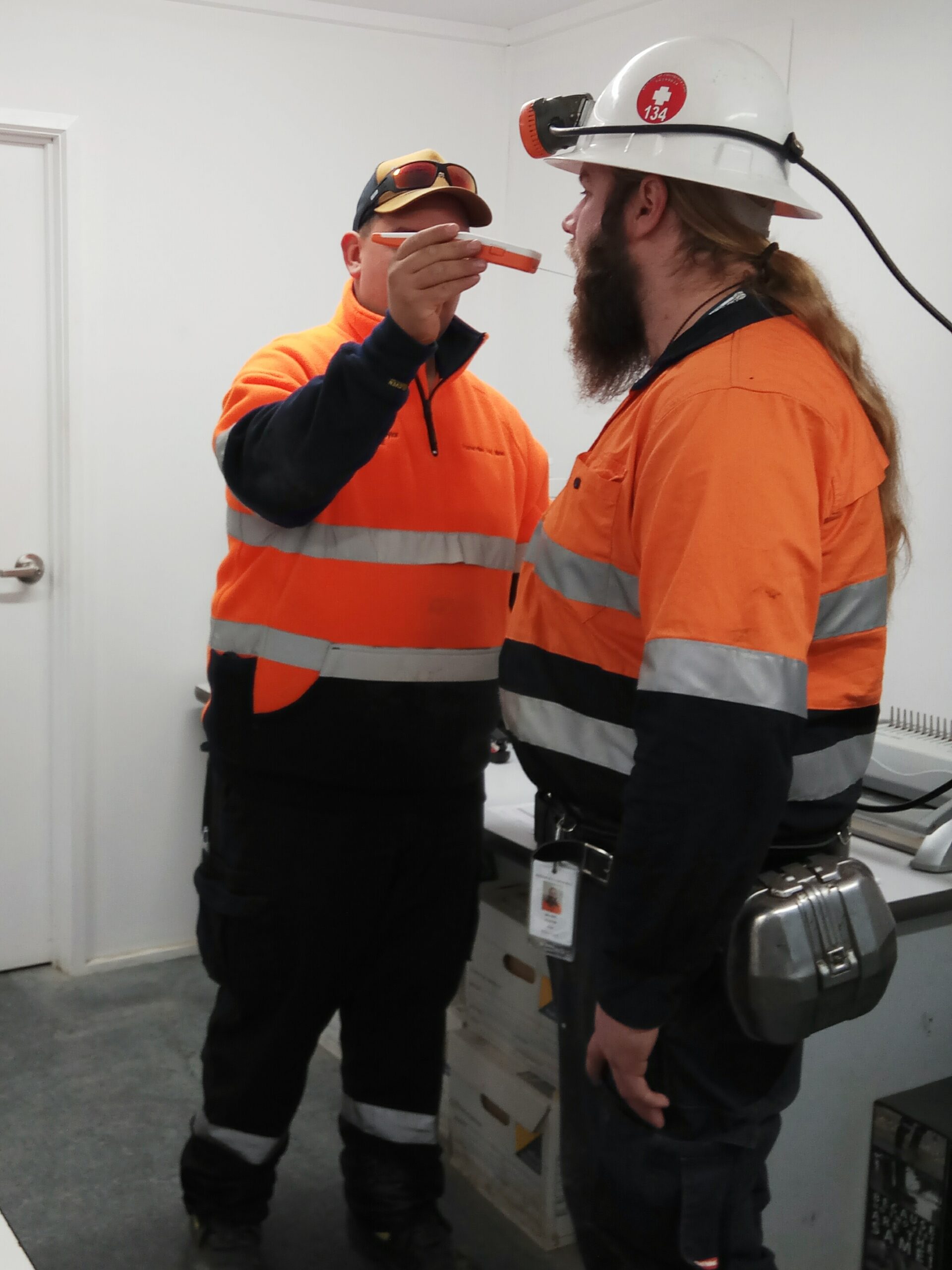
Know Who's Hydrated On Your Work Force
We’re the only company who solved this blatant issue. We deliver lab-quality hydration testing in 8 seconds. No urine collection. No waiting. No guesswork.
How It Works
Step 1: Insert test strip into MX3 testing device
Step 2: Worker touch the sterile test strip to tip of tongue for 3 seconds
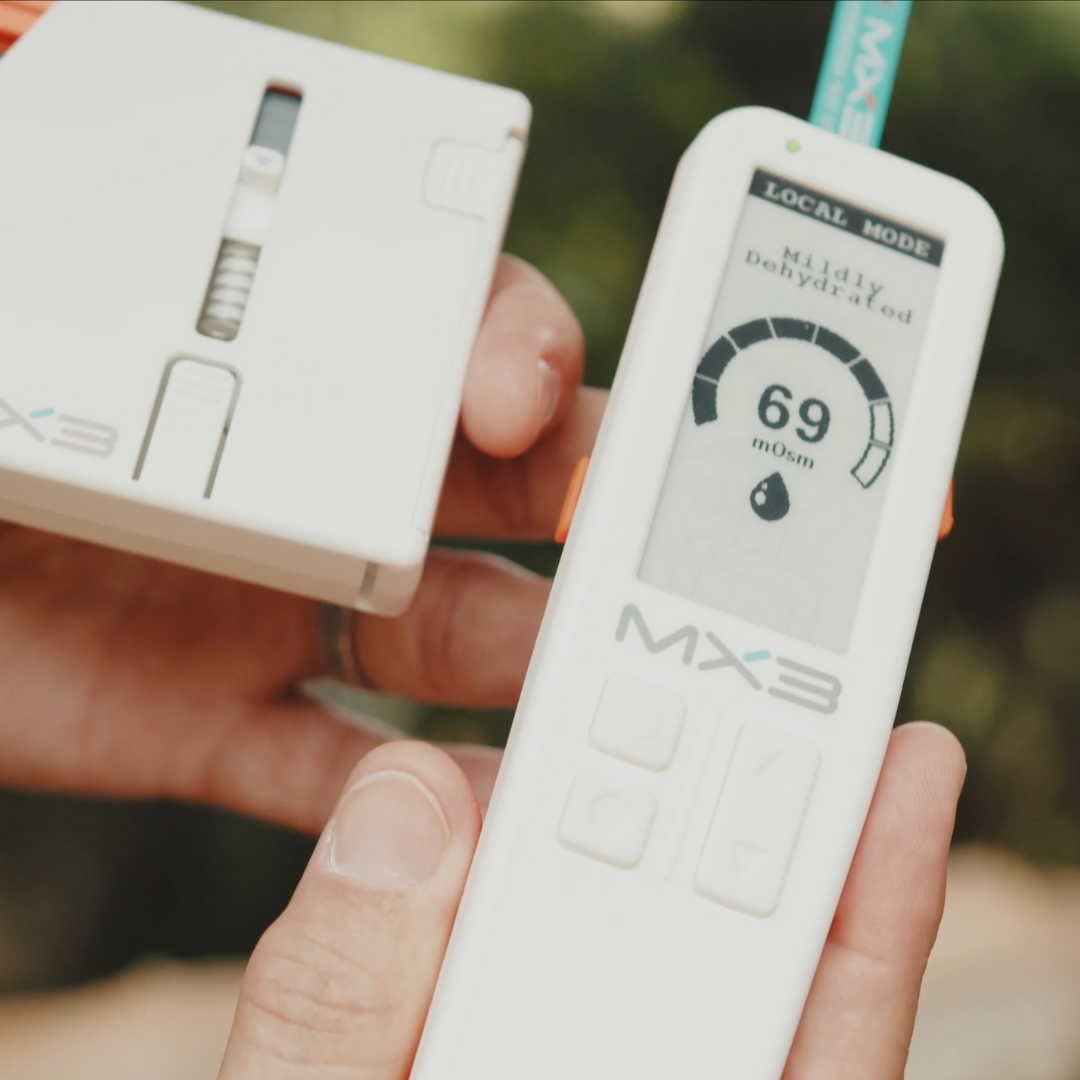
Step 3: Get lab-accurate hydration reading in 8 seconds total
That’s it. The entire process is faster than washing your hands.
The device measures salivary osmolarity using electrochemical sensors, the same technology used in $50,000 laboratory osmometers. We just miniaturized it, made it portable, and solved the calibration problems that stumped everyone else.
Our correlation with laboratory equipment: R² = 0.95
That’s not “pretty close.” That’s lab-accurate results in the palm of your hand.
But don’t take our word for it…

US Air Force Validated Our Testing Accuracy
The U.S. Air Force conducted the most rigorous third-party validation study we’ve seen. Their conclusion:
“MX3 is accurate in its estimates compared to a laboratory grade osmometer.”
When the military trusts your technology for soldier health monitoring in combat conditions, you know it works.
Independent validation from Monash University showed R² = 0.945 correlation with FDA-registered lab equipment. Field testing with 90 participants across different work environments showed significant correlation with actual body mass loss. Traditional urine testing in the same study? No correlation at all.
What This Means for Your Operation
Pre-shift testing: Know who’s starting the day already dehydrated—before they step into heat exposure. Cal/OSHA data shows nearly half of heat illness cases occur on an employee’s first day. You can catch those people before they start work.
Spot-check verification: Objectively verify your hydration protocols are actually working. Not just that water’s available, but that workers are maintaining safe hydration levels.
Acclimatization monitoring: Track new worker hydration status across their first five days to ensure acclimatization protocols are actually protecting them.
Incident prevention documentation: Six months of objective hydration data demonstrating proactive compliance efforts. When OSHA shows up, you’ve got records proving you weren’t just checking boxes.
Post-incident investigation: Objective data showing whether dehydration was a contributing factor. Critical for both safety improvements and liability protection.
OSHA’s findings:
Companies implementing effective safety and health programs can reduce injury and illness rates by 20% or more while generating $4 to $6 in savings for every $1 invested.
That productivity gain alone paid for the entire program. Everything else—injury prevention, penalty avoidance, workers’ comp savings—was pure profit.
Real-World Results
“Not one recordable injury due to heat illness”
“Since we started using MX3, the US Incinerations Group has not had one recordable injury due to heat illness….. This technology has greatly improved our ability to show our employees that safety is truly our number one priority.”

“Easy to use and less invasive “
“The MX3 HTS unit has proven to be both easy to use and less invasive than traditional methods while delivering the results in a timely manner. The app is a great visual aid to personnel to get a clear picture of where they are at with their hydration as well as their previous results all at one time.”

“Best heat-stress and hydration tool out there”
“I’ve been using the MX3 on minesites, remote exploration and construction sites for around 5 years now. It’s easily the best heat-stress and hydration educational tool out there. I’ve seen workers convinced, clients convinced and it’s benefits extend far beyond work into sporting activities and improving personal health issues. In safety terms, I have seen dramatic reductions in heat related issues across Western Australia when MX3 programs have been rolled out.”

“16 Units Deployed in One Department”
“Removing the hygiene risks and paperwork requirements has really improved testing frequency and team buy-in. It’s also great for diversity and inclusion – no bathrooms necessary. We have over 15 MX3’s in use in our department alone and I’ve helped a few other work groups with getting them and how to use and set up with their teams and they’ve been brilliant.“
“We’re impressed with its (MX3) impact”
“MX3 has helped us engage our workforce and improve their hydration awareness. Since its introduction, more people are consuming more water. MX3’s measurable results have allowed us to take action on our hydration strategies. We’re impressed with its impact and excited to continue using it to promote healthy habits.”

“Useful for measuring hydration levels”
We are only just starting to use the MX3 but have found it useful for providing indication of hydration levels. The training within the mobile app is really helpful.”

“Great System”
“We use MX3 at all our rigs. Great System. Looking to expand how we levage it capabilites.”

“Instant results… Female-friendly”
“Historically we have used urine testing for hydration which, given the environments in which we work, was less than ideal.
As a company wanting to attract women to the industry, we needed to look at options available to ensure processes are and can be followed. The decision to use the MX3 in place of the standard refractometer was a direct result of our commitment to safety.
Most importantly it is a simple piece of equipment to use. This is a huge plus as pushback and reluctance to use it has been non-existent. It can be used by males and females alike without the privacy concerns of attempting to collect a urine sample on a drill pad.
The number that it generates is a true representation of the individuals state of hydration. Instant results to both the individual and the dashboard equips us to understand and adjust this critical factor.
Having a control in place that allows for instant actionable management of individuals hydration levels is a game changer.”

“Better than urine testing”
“We recently purchased an MX3 and enjoying using it so far, (much preferable to urine testing!). We are utilizing it on a mine site in the hottest place in Australia.”

“…reliable tool for us”
“The MX3 has become a reliable tool for us in far North QLD conditions, both for the tester and the worker.”

“much quicker & easier, hygienic and instant”
“Yes it’s brilliant, dehydration is a huge thing here in Nhulunbuy, so we’re doing regular testing of most people during the hotter months. Previously we’ve been using these strips that you pee on – fine and they work (most of the time) but not the most hygenic way to go about it… Since we got your unit it’s been much quicker & easier, hygienic and instant, gives better more detailed info as well.
The numbers: 7,000,000+ million tests worldwide. Zero heat-related incidents across deployments.
Companies Using MX3 Hydration Testing









How to Get Started
Ready to order?
Shop MX3 Store – Individual devices and small team kits ship within 1-5 business days
Need wholesale pricing or deployment planning?
Contact: [email protected]
Response time: Within 1-2 days
For larger deployments (50+ workers), we’ll discuss your workforce size, work environment, and create a custom implementation plan with wholesale pricing. Many clients start with a pilot deployment in one department before full rollout.
The Bottom Line
Every summer it keeps getting hotter. OSHA just issued the first federal heat standard. Penalties are reaching $165,514 per willful violation. Average heat incidents cost hundreds of thousands when you count all the costs we outlined above.
Traditional methods don’t work:
- Visual observation catches dehydration too late
- Urine testing is invasive, inaccurate, and impractical
- Sweat patches require active sweating and provide no baseline
- Self-reporting is useless—workers can’t detect their own dehydration
You need objective data:
- Verify hydration protocols actually work
- Catch dehydration before cognitive impairment sets in
- Document compliance when OSHA inspects
- Recover the 12-50% productivity lost to dehydration
MX3 delivers:
- Lab-accurate results in 8 seconds
- No urine collection, no waiting, no guesswork
- R² = 0.95 correlation with laboratory equipment
- US Air Force validated accuracy
- $0.75 per test (typical annual cost: $30-75 per worker depending on testing frequency)
- HIPAA compliant, SOC 2 certified
- Over 7 million tests deployed worldwide
The ROI is immediate:
- $4-6 saved for every dollar invested in safety programs
- 15-27% injury reduction documented with prevention programs
- 43% productivity increase in field trials
- Single prevented incident saves hundreds of thousands in total costs
Your workers deserve to go home safe every day. This technology makes that possible.